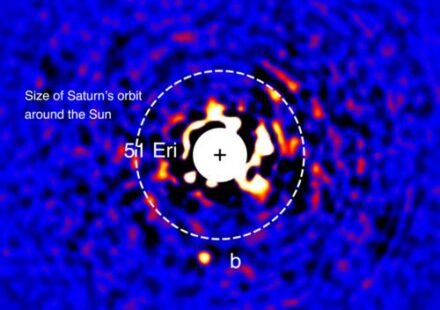

Software squeezes more data out of Webb Telescope for imaging exoplanets
Software optimizes a physical model of the telescope to reduce noise.

Ancient Meteorite Found in the Sahara Holds Secrets About Mars’ Watery Past
The 4.1-billion-year-old meteorite is a “Rosetta Stone for Mars,” preserving clues about how the Martian environment has changed since the solar system formed.

Why large dogs age faster than small ones, and other October research highlights
Plus invisible tattoos, medieval skeleton gets an ID, trapping a single antimatter particle, and more.

A Newly Discovered Trail of Cosmic Debris Illustrates How the End of the Solar System Could Look
A dying star 1,600 light-years from Earth is surrounded by two rings of gas and dust that astronomers believe are the remnants of the planetary bodies it once hosted.

White Dwarfs Aren’t Just White. Scientists Discover Dying Stars Turning Pink and Green
Astronomers find that a white dwarf’s density and the kind of material it absorbed from its surroundings can produce a rainbow of shades in the star’s atmosphere.
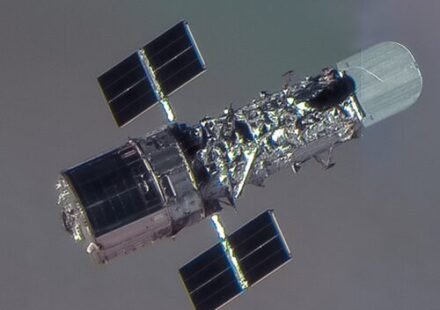
Think you can save the Hubble Space Telescope? NASA wants to know.
The space agency solicited ideas for reboosting Hubble four years ago, but they didn't go anywhere.
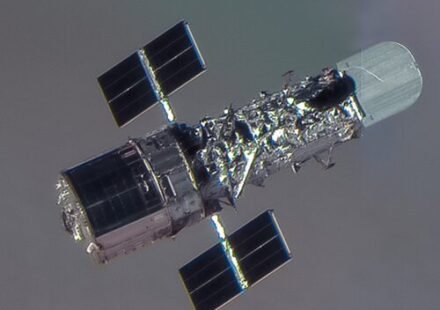
Once again, NASA is asking for ideas to rescue Hubble from certain death
The space agency solicited ideas for reboosting Hubble four years ago, but they didn't go anywhere.

Inside the Supermassive Debate Over the James Webb Telescope’s ‘Little Red Dots’
The Webb telescope sees tiny red dots everywhere. Astronomers can’t agree on what they are, but some believe they may be enormous stars with black holes inside.

The ‘Exotic Physics’ Behind a Mysterious 1,000-Mile Cloud on Mars
The cloud has baffled astronomers since its discovery in 2018. Now, a new study offers a possible cause for its appearance.

How to See the Orionid Meteor Shower and Other Upcoming Astronomical Events
Made up of small fragments left behind by Halley’s Comet, these meteors are known for being especially bright and speedy.